Did you know that St. Theresa parish has a private association of the faithful called the Benedictine Oblates of the Holy Cross? What is a private association of the faithful?
Definition of Private Association of the Faithful
A private association of the faithful in the Catholic Church is a group of laypeople and often clergy who join together, with approval from the diocesan bishop, to foster a deeper Christian life, promote public worship, and/or participate in apostolates. Canon law clarifies what “private” means and sets out how an association of the faithful may receive juridic status, which refers to the Church recognizing the association as havin certain rights and obligations within the Church. Canon law also indicates how private associations should govern themselves, and how they are to be supervised so that their activity truly serves the common good. Private associations arise from the initiative of the faithful, but they must still be oriented toward ecclesial ends and are not free from ecclesial oversight. 1 Private associations exist not beside the Church, but within her: the Holy Spirit animates their internal life, yet it must remain aligned with the Church’s mission and communion.
Formation, statutes, governance, and ecclesial recognition
Canon law (canons 298–311 and 321–326) provides the framework for these associations. The faithful have the right to freely establish and govern such groups, provided their purposes are consistent with Church teaching and discipline. This reflects a broader principle within the Church: that all baptized members share in its mission and are encouraged to participate actively in its life. Private associations thus become a concrete expression of lay initiative and responsibility. Private associations originate through a “private agreement” among the faithful. Yet canon law does not treat them as purely private clubs detached from the Church’s order. Private associations must have their own statutes defining essential elements: purpose, government, conditions for membership, and operation of the association. 2 Canon law affirms a real autonomy for private associations, but it is an autonomy “according to the prescripts of the statutes.” 3 The faithful guide and direct the association through these statutes they establish. Canon law requires that no private association is “recognized in the Church” unless competent authority reviews its statutes. 4 This provides a juridical boundary: the association may be formed by initiative of the faithful, but the Church must be able to verify that its structure and purposes align with ecclesial norms.
Conclusion
Private associations of the faithful express the Church’s vitality: believers freely unite to pursue spiritual and apostolic purposes, and they shape their internal governance through statutes, approved by the bishop. Private associations of the faithful demonstrate the interplay between individual initiative and institutional structure within Church law. They empower laypersons to contribute meaningfully to the Church’s mission while remaining rooted in its doctrinal and pastoral guidance. As such, they are a vital expression of communion and collaboration within the life of the Church. Below is the purpose and nature of the private association of the faithful at St. Theresa, the Benedictine Oblates of the Holy Cross, as given in the statutes approved by Bishop Talley. If you wish to learn more about the Benedictine Oblates of the Holy Cross please take a printout located in the Church in front of the statue of St. Benedict and contact Father Gonzalez for more information.
From the Statutes of the Benedictines Oblates of the Holy Cross:
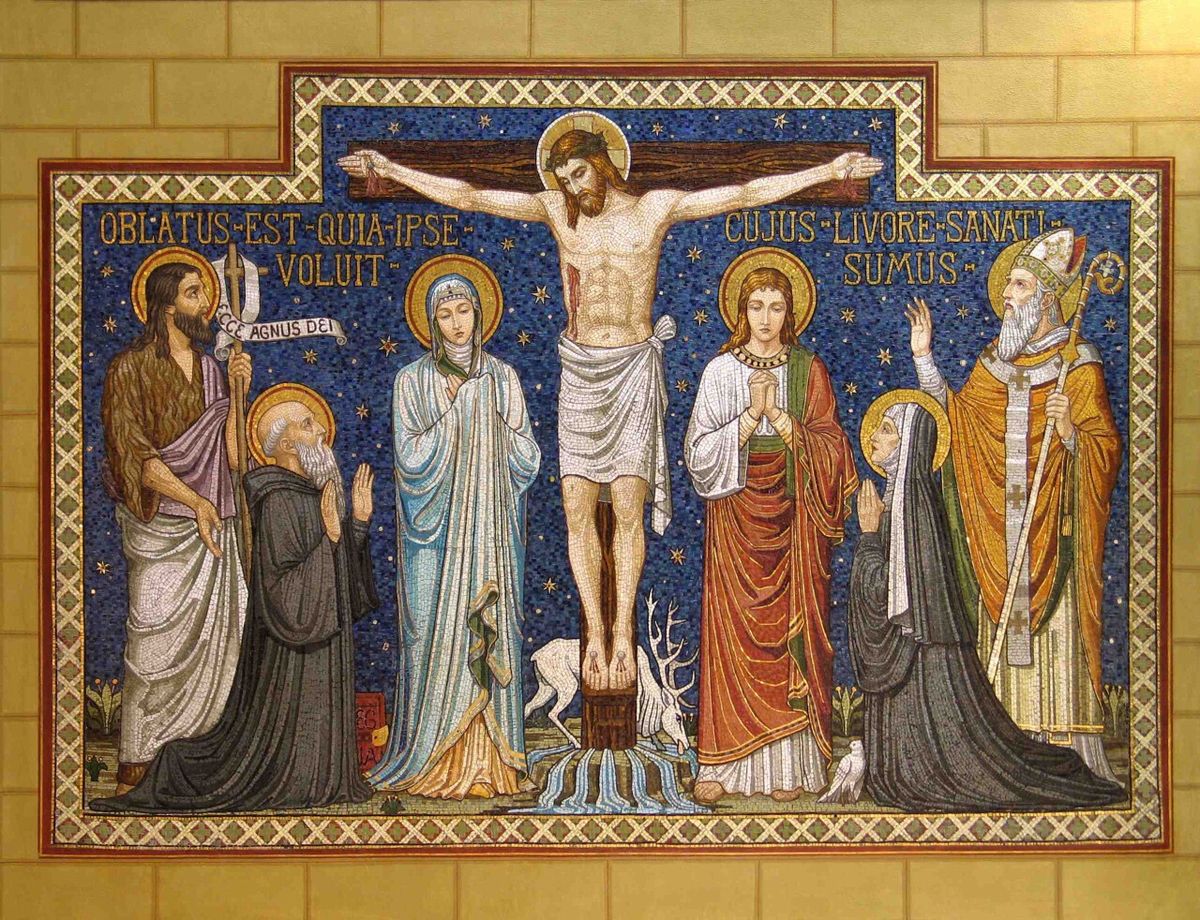
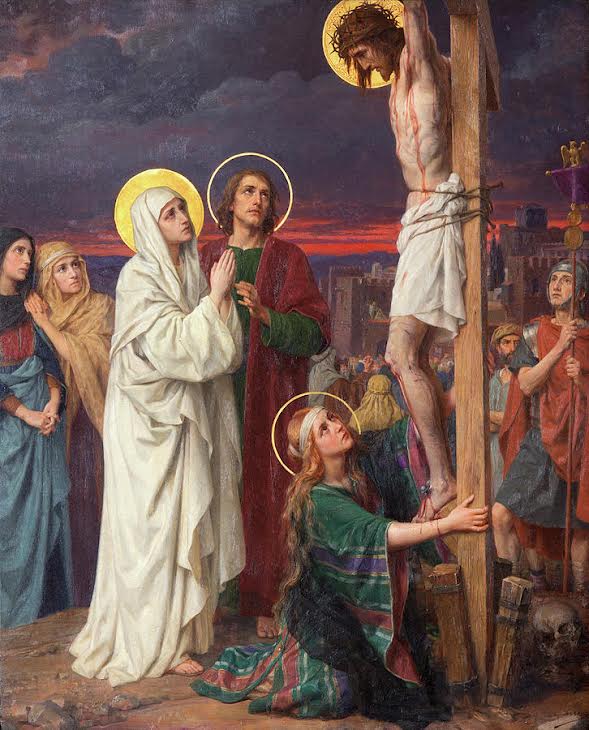
The Benedictine Oblates of the Holy Cross is a private association of the faithful of cleric and lay members who reside in the Diocese of Memphis and are Benedictine Secular Oblates of Our Lady of the Annunciation (Clear Creek) Abbey or Benedictines of Mary, Queen of Apostles (Ephesus) Abbey. The purpose of The Benedictine Oblates of the Holy Cross is to seek to grow in sanctity and in closer union with Christ through daily liturgical prayer and devotion (the Holy Mass, Divine Office, the Sacraments, Adoration, daily recitation of the Holy Rosary, and the traditional devotions of the Church), as well as the application of the principles of the Holy Rule of St. Benedict according to their state of life. Per c. 298 §1 of the CIC, the Benedictines of the Holy Cross strive in a common endeavor to foster a more perfect life in ecclesial communion. The nature of the Benedictine Oblates of the Holy Cross is threefold: it is Benedictine in spirituality, it is linked to oblature at either Clear Creek or Ephesus Abbey, and it is undergirded by following the way of the Holy Cross. The Benedictine Oblates of the Holy Cross place a particular emphasis on conforming to the Mystery of the Lord’s Cross. This takes place in the daily conformity to God’s Will, and patient endurance of trials faced in our states of life, much of the training for which is found in the Holy Rule. As Benedictine Oblates of the Holy Cross, we unite our daily crosses with the Cross of Christ, under the guidance and wisdom of our Holy Father Benedict, and sanctify them through the Mysteries we celebrate in the Sacraments and sacrifice of praise of the Divine Office.
1 Code of Canon Law: New English Translation (Washington, DC: Canon Law Society of America, 1998),
c. 299,323.
2 Ibid., c. 304.
3 Ibid., c. 321.
4 Ibid., c. 299.




Leave A Comment